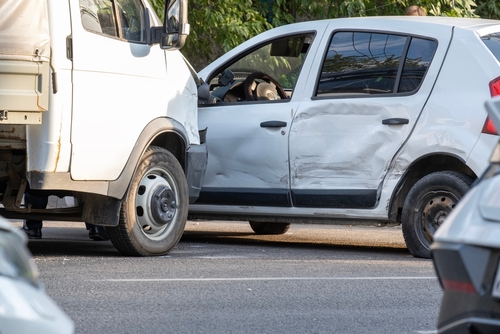
Depending on the facts of your crash, liability for a California truck accident may involve the driver, the motor carrier, the vehicle’s owner, a maintenance provider, a cargo loader, a component manufacturer, or another negligent road user. Each of these theories requires its own separate proof, which is why truck accident cases generally take more investigation than a typical passenger vehicle crash.
At Trevino Law Firm, our personal injury attorneys help Palmdale and Antelope Valley truck accident victims identify every party who may be responsible for their crash. If you were injured in a collision with a commercial truck, call (661) 526-5012 to talk with our team.
Begin With Why the Truck Crashed
Understanding who’s liable starts with understanding what actually caused the crash. Common causes include:
- Driver fatigue
- Excessive speed
- Following too closely
- Distracted driving
- Inadequate vehicle maintenance
- Tire or brake failure
- A cargo shift during transit
- Poor visibility
- Hazardous roadway conditions
The specific cause, or combination of causes, points toward which parties may bear responsibility.
The Driver and Motor Carrier Are Usually Central to the Investigation
The truck driver’s own conduct is often the starting point of any investigation, but the motor carrier that employs or contracts with the driver frequently shares responsibility as well, particularly when the carrier’s own hiring, training, supervision, or dispatch practices contributed to the crash.
Driver Qualification and Hours Records
A driver’s qualification file, generally required to be maintained by the motor carrier, along with electronic logging device (ELD) data showing hours-of-service compliance, paper or electronic driving logs, and dispatch records, can all reveal whether the driver was properly qualified and whether fatigue-related hours-of-service violations played a role in the crash.
The FMCSA’s hours-of-service regulations set specific limits on how long a commercial driver can be on duty, though certain exceptions can apply depending on the type of operation.
Inspection and Maintenance Companies
Repair orders, annual and periodic vehicle inspection records, and brake and tire maintenance records can reveal whether the truck was properly maintained leading up to the crash. When maintenance is outsourced to a separate company rather than handled in-house by the motor carrier, that maintenance provider may bear independent liability if negligent repair or inspection work contributed to a mechanical failure.
Cargo Loaders and Product Manufacturers
When improperly loaded or secured cargo contributes to a crash, such as through a shift in weight distribution or a load that comes loose, the company responsible for loading the cargo may bear liability, separate from the driver and motor carrier.
Similarly, when a defective vehicle component, such as brakes, tires, or steering systems, contributes to the crash, a product liability theory against the component’s manufacturer may apply, though this theory requires specific evidence supporting an actual product defect rather than a general assumption based on the failure alone.
Federal Safety Rules Do Not Replace California Liability Law
Compliance or noncompliance with FMCSA regulations is a distinct question from civil liability under California law. Federal trucking regulations set safety standards for the industry, but establishing negligence or product liability in a California civil claim still requires proving the specific elements of that claim under California law.
A federal violation can serve as important evidence, but it doesn’t automatically substitute for the civil legal analysis your claim actually requires.
Preserve Electronic and Physical Evidence Quickly
Truck accident cases depend heavily on electronic and physical evidence that can disappear quickly if it isn’t preserved right away, including:
- Engine control module (ECM) data
- Electronic logging device (ELD) records
- Telematics and GPS tracking data
- Dashcam footage, from either the truck or nearby vehicles
- Cell phone records, if driver distraction is suspected
- The truck and trailer themselves, before repair or salvage
- Damaged components connected to a suspected mechanical failure
- Scene evidence, including photographs, skid marks, and debris
Because trucking companies aren’t always required to retain this data indefinitely, sending a formal evidence preservation request as early as possible is critical to protecting your case.
Commercial Insurance and Corporate Layers Need Early Identification
Commercial trucking operations often involve multiple layers of corporate structure and insurance coverage, including the motor carrier’s primary policy, separate leasing arrangements for the truck itself, questions about who actually owned or operated the vehicle at the time of the crash, and independent contractor relationships that can complicate who’s ultimately responsible.
Identifying every applicable insurance policy and giving proper notice and tender of your claim to each potentially responsible party early in the process is an important part of protecting your ability to recover full compensation.
Catastrophic Injuries Require Future-Loss Documentation
Truck accidents frequently cause catastrophic injuries given the size and weight differential between commercial trucks and passenger vehicles.
Documenting the full scope of these injuries generally requires a life care plan projecting future medical needs, an assessment of lost earning capacity, documentation of any permanent disability or disfigurement, and an accounting of how the injury has affected the victim’s family and daily life.
Preemption and Broker/Shipper Liability Are Specialized Issues
Claims involving a freight broker or shipper raise specialized legal issues, including federal preemption questions that can limit certain state-law claims against a broker under current federal law.
Whether a broker or shipper can be held liable in a specific case depends on the current state of federal preemption law and the specific facts connecting that party to the crash. This is a developing and technical area of law that requires individualized attorney review rather than a general assumption that a broker or shipper is automatically liable.
Let Trevino Law Firm Identify Every Responsible Trucking Party
Truck accident cases require untangling driver conduct, motor carrier practices, maintenance history, cargo loading, and sometimes broker and shipper relationships, all while racing to preserve electronic evidence before it disappears.
Our founding attorney, Darlene Trevino, brings a unique perspective to every case, having worked as an insurance claims adjuster before turning her focus to representing injured people, giving her firsthand insight into how commercial insurers evaluate and attempt to limit truck accident claims. Our bilingual attorneys represent clients throughout Palmdale and the Antelope Valley in truck accident cases, including tractor-trailer jackknife accidents, as well as car accidents and uninsured motorist accidents.
Contact Trevino Law Firm at (661) 526-5012 today to have our team identify every party responsible for your truck accident.
California Truck Accident Liability Frequently Asked Questions
Is the trucking company always liable for its driver?
Not automatically. Whether a motor carrier is liable for its driver’s conduct depends on the specific employment or agency relationship involved, along with other fact-specific theories like negligent hiring, training, or supervision. This requires a careful review of the specific relationship between the driver and the carrier.
Can a maintenance company be liable for a truck crash?
Yes, when negligent inspection or repair work contributes to a mechanical failure that causes or contributes to the crash. This requires evidence connecting the specific maintenance work performed to the failure that occurred, such as repair records showing inadequate or improper service.
What truck data should be preserved after a crash?
Important data includes electronic logging device (ELD) records, engine control module (ECM) data, telematics and GPS data, dashcam footage, and the motor carrier’s maintenance and dispatch records. This data should be preserved as quickly as possible, since it isn’t always retained indefinitely.
Do federal trucking violations automatically prove negligence?
No. A federal regulatory violation can be relevant evidence in a civil case, but establishing negligence or liability under California law still requires its own separate legal and factual analysis connecting the violation to the cause of your specific crash.