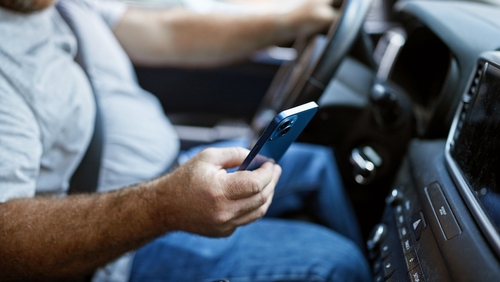
A distracted truck driver can cause a serious crash in seconds. Federal rules restrict commercial drivers’ texting and handheld phone use while driving, but distraction can involve other tasks too. If a crash happened in California, the evidence may help show what the driver was doing and whether another party contributed.
What Counts as Distracted Driving for a Truck Driver?
Distraction includes visual, manual, and cognitive tasks that pull attention from driving. A driver may look at a phone, reach for food, adjust a device, read dispatch messages, or focus on a conversation instead of traffic. A task can be distracting even when it is not prohibited by a specific regulation.
Federal Motor Carrier Safety Administration rules generally prohibit commercial motor vehicle drivers from texting while driving and from using a hand-held mobile telephone while driving. The regulations define covered conduct and include limited exceptions, so whether a rule applies depends on facts such as the vehicle, the driver’s status, and the action taken. A violation may be relevant evidence, but it does not automatically decide civil liability.
Why Distraction Can Make a Truck Crash Harder to Avoid
A commercial truck’s size, stopping distance, and maneuvering limits can make a brief lapse consequential. The actual danger depends on speed, road conditions, traffic, load, and the driver’s response. Avoid assuming that every truck crash involved distraction or that a phone violation caused a particular collision; investigators need evidence linking conduct to the event.
Who May Be Responsible After a Distracted Truck Crash?
The truck driver may be responsible if careless conduct caused the crash. A motor carrier may also face responsibility under applicable law for an employee’s driving or for its own conduct, such as a failure to maintain a vehicle or to follow safety requirements. Whether any company, contractor, vehicle owner, or other person is legally responsible depends on the relationship and evidence in the specific case.
California follows comparative-fault principles. An injured person’s own share of responsibility can affect recovery, but the insurer’s position is not a final finding. Liability and damages are determined from the evidence and applicable law.
Evidence That Can Help Explain What Happened
A careful investigation may consider the police report, photographs, witness accounts, vehicle damage, roadway marks, medical records, and available video. Truck-related evidence can include event data, electronic logging information, dispatch communications, inspection and maintenance records, and the driver’s qualification or training records. Phone records may be relevant when obtained through lawful procedures.
Some records are retained for limited periods or may be overwritten. Keep copies of your own photos, messages, bills, and treatment records, and write down what you remember while it is fresh. Do not access another person’s phone or accounts. A lawyer can explain lawful preservation steps and whether a formal request is appropriate.
What to Do After a California Truck Collision
Call emergency services when needed, move to a safe location if you can, and seek medical evaluation. Follow your clinician’s instructions and keep a record of symptoms and appointments. Exchange identifying and insurance information, photograph the scene if safe, and collect witness contact details. Avoid posting assumptions about fault or signing a broad release before you understand what it covers.
Deadlines depend on the claims and parties involved. California generally allows two years for an action for personal injury, while other deadlines or shorter claim-presentation requirements may apply, including claims involving public entities. Do not rely on the general period without checking accrual, tolling, and any special notice rule.
What Investigators May Look For
Investigators may compare accounts from the drivers and witnesses with physical evidence, vehicle inspection findings, roadway marks, and video. A timeline can matter: when the truck entered the area, when braking began, what signals or hazards were visible, and whether either driver had time to react. Electronic records can provide context, but they should be interpreted with the circumstances of the collision rather than treated as a complete explanation on their own.
A commercial driver’s logs, inspection history, safety communications, and dispatch messages may help explain the trip and the carrier’s role. Some records are maintained under regulatory rules, but retention and availability vary. A prompt, targeted preservation request may help prevent relevant material from being lost. Whether the evidence is admissible or proves negligence is a separate legal question.
An injured person should focus first on safety and medical care, then preserve what is within their control. Keep photographs in their original form, note witness names, and save communications with insurers. Avoid speculating about phone use or fault in a statement if you do not know what happened. A careful investigation can determine whether distraction is supported by evidence.
How Trevino Law Can Help
Our team can review the collision circumstances, explain what evidence may matter, and discuss available next steps. To talk with Trevino Law, give our office a call at (661) 526-5012.
Frequently Asked Questions
Does federal law prohibit truck drivers from texting while driving?
Yes. Federal regulations generally prohibit texting by commercial motor vehicle drivers while driving, subject to the regulation’s definitions and exceptions. Handheld phone use is also restricted.
Can the trucking company be liable for a distracted-driving crash?
Possibly. Responsibility depends on the driver’s work relationship, the company’s conduct, and the evidence connecting the conduct to the crash.
How can distraction be proved?
Evidence may include video, witness statements, vehicle data, dispatch records, phone information obtained lawfully, and the sequence of events. No single source is conclusive in every case.
How long do I have to bring a California injury claim?
The general personal-injury period is two years, but accrual rules, tolling, and special procedures can change the deadline. Claims against a public entity can require earlier claim presentation.