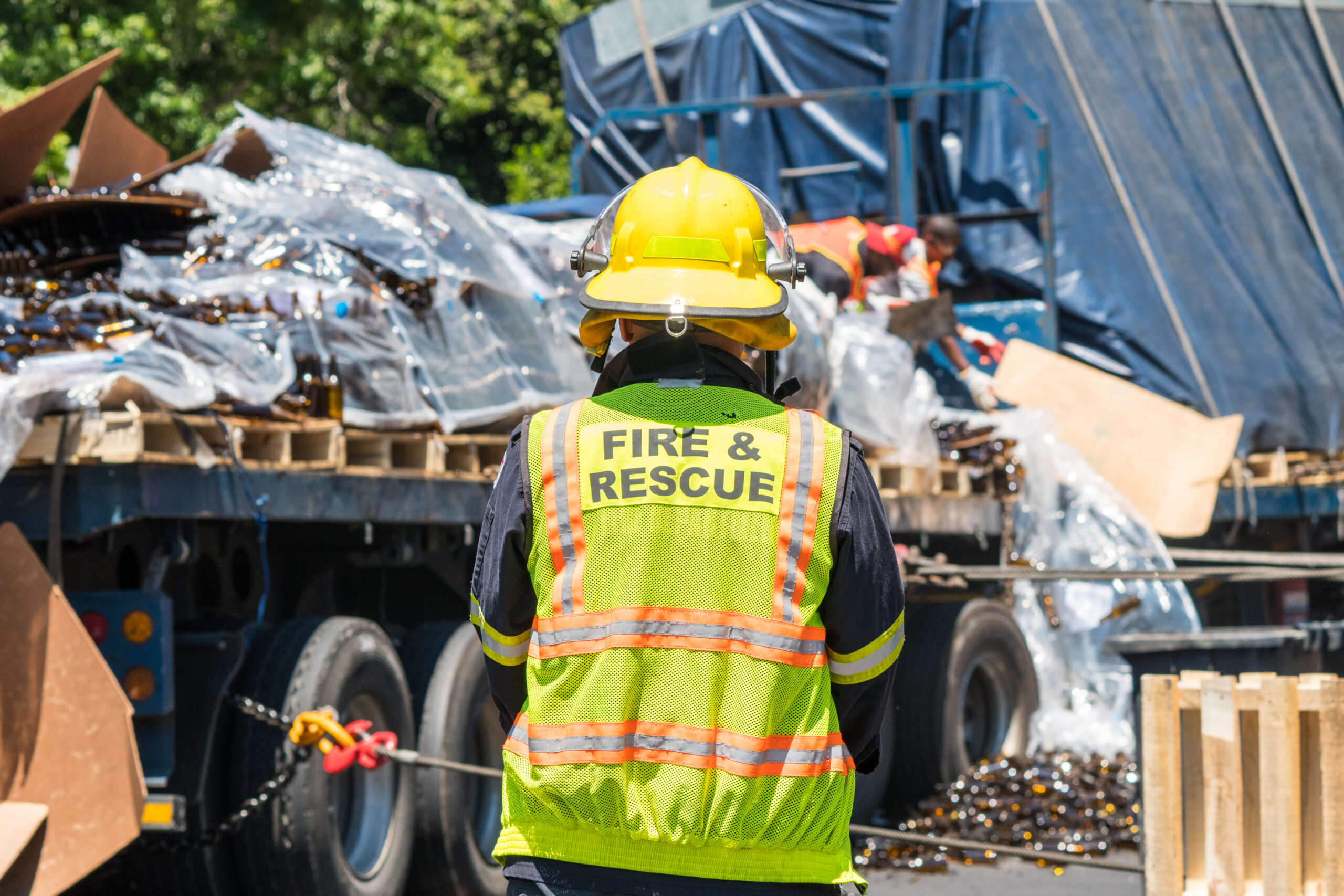
A jackknife accident is one of the most frightening things that can happen on the highway. When a large truck folds in on itself, it can sweep across multiple lanes and leave devastating injuries in its path.
Understanding why these crashes happen is the first step toward understanding who may be responsible. Below are the three most common causes of tractor-trailer jackknife accidents and what they can mean if you have been hurt in one.
What Is a Jackknife Accident?
A jackknife accident happens when a truck’s trailer swings out to the side and folds toward the cab, forming an angle like a partially closed pocketknife. The driver loses control as the trailer pushes the tractor.
Because a loaded tractor-trailer is so large and heavy, a jackknife can block lanes, strike multiple vehicles, and cause serious harm in seconds. These are rarely minor collisions, and the injuries they cause are often severe or life-changing.
Jackknifes can happen suddenly, but they usually are not truly “accidents” in the sense of being unavoidable. More often, something went wrong that someone could have prevented, which is why tractor-trailer jackknife accident claims so often come down to identifying the underlying cause.
The 3 Most Common Causes
While every crash is different, most jackknife accidents trace back to a few recurring problems. Here are the three that appear most often.
1. Braking Errors and Brake Failure
Braking problems are a leading cause of jackknife accidents. When a driver brakes too hard or improperly, the trailer’s wheels can lock up and lose traction, causing the trailer to slide out of line with the cab.
The problem is worse when brakes are poorly maintained or out of balance between the tractor and trailer. Federal rules require trucking companies to keep braking systems in safe working order, and failures here often point to negligence. Anti-lock braking systems help, but they are not a guarantee, especially on wet or uneven roads.
2. Speeding and Driving Too Fast for Conditions
Speed is another frequent culprit. Driving too fast, especially on curves, downgrades, or slick roads, makes it far easier for a trailer to swing out of control.
“Too fast” does not always mean over the posted limit. A speed that is legal in dry conditions can be dangerous in rain, ice, or heavy traffic, and truck drivers are expected to adjust. The danger multiplies when speed combines with driver inattention; distracted driving leaves a driver with less time to react before a trailer breaks loose.
3. Equipment Failure and Improper Loading
Mechanical problems and cargo issues make up the third major cause. Worn tires, failing brakes, and other maintenance lapses can trigger a loss of control, as can a trailer that is loaded unevenly or not secured properly.
When cargo shifts or a load is unbalanced, the trailer can behave unpredictably and jackknife. Responsibility for these failures may fall on the trucking company, a maintenance provider, or whoever loaded the freight. That is why preserving the truck’s maintenance and inspection records early can be so important to a case.
Who Can Be Held Liable for a Jackknife Accident?
One reason truck accident cases are complex is that more than one party may share the blame. A jackknife crash is rarely just about the person behind the wheel.
Depending on what caused the crash, responsibility might rest with the driver, the trucking company that employed them, a maintenance provider that serviced the truck, or the company that loaded the cargo. Federal safety regulations from the FMCSA govern much of how trucks and carriers must operate, and violations can be strong evidence of negligence.
Identifying every responsible party matters, because it can mean more than one source of compensation for your injuries. This is where an experienced California truck accident lawyer can make a real difference.
How California’s Comparative Fault Rule Affects Your Claim
California follows a pure comparative negligence rule. That means you can still recover compensation even if you were partly at fault for the crash, though your recovery is reduced by your share of the blame.
This is important because insurers for the trucking company will often try to shift responsibility onto you. Reducing your assigned fault can directly increase what you recover, which is one reason strong evidence matters so much in these cases.
What to Do After a Jackknife Truck Accident
The steps you take afterward can protect both your health and any claim you may have. First, get medical attention right away, even if you feel okay, since serious injuries are not always obvious at first.
If you are able, document the scene with photos and gather contact and insurance information. Truck cases often rely on evidence that can disappear quickly, such as the truck’s maintenance and data records, so acting quickly is key.
Finally, be careful what you say to insurers, and consider speaking with an attorney before giving any recorded statement. What you say early on can affect your claim later.
Talk to a California Truck Accident Attorney
A jackknife accident can leave you facing serious injuries, lost income, and pressure from insurance companies that are focused on their bottom line. You do not have to face that alone.
The team at Trevino Law can investigate what caused your crash, identify everyone who may be responsible, and fight for the full compensation you deserve. We handle truck and car accident claims across the region, and if distracted driving or an uninsured motorist played a role, we can help with those issues too.
Call (661) 526-5012 today for a free consultation.
Frequently Asked Questions
What exactly is a jackknife accident?
It happens when a truck’s trailer swings out and folds toward the cab, forming a sharp angle. The driver loses control, and the crash can affect multiple lanes and vehicles.
Who is at fault in a jackknife accident?
It depends on the cause. Responsibility may fall on the driver, the trucking company, a maintenance provider, or the party that loaded the cargo, and sometimes more than one of them.
Can I recover damages if I was partly at fault?
Yes. Under California’s pure comparative negligence rule, you can still recover even if you were partly to blame, though your compensation is reduced by your percentage of fault.
How long do I have to file a claim in California?
California sets a limited time to file a personal injury claim, and missing it can end your case. Because the exact deadline depends on your circumstances, you should speak with an attorney promptly.